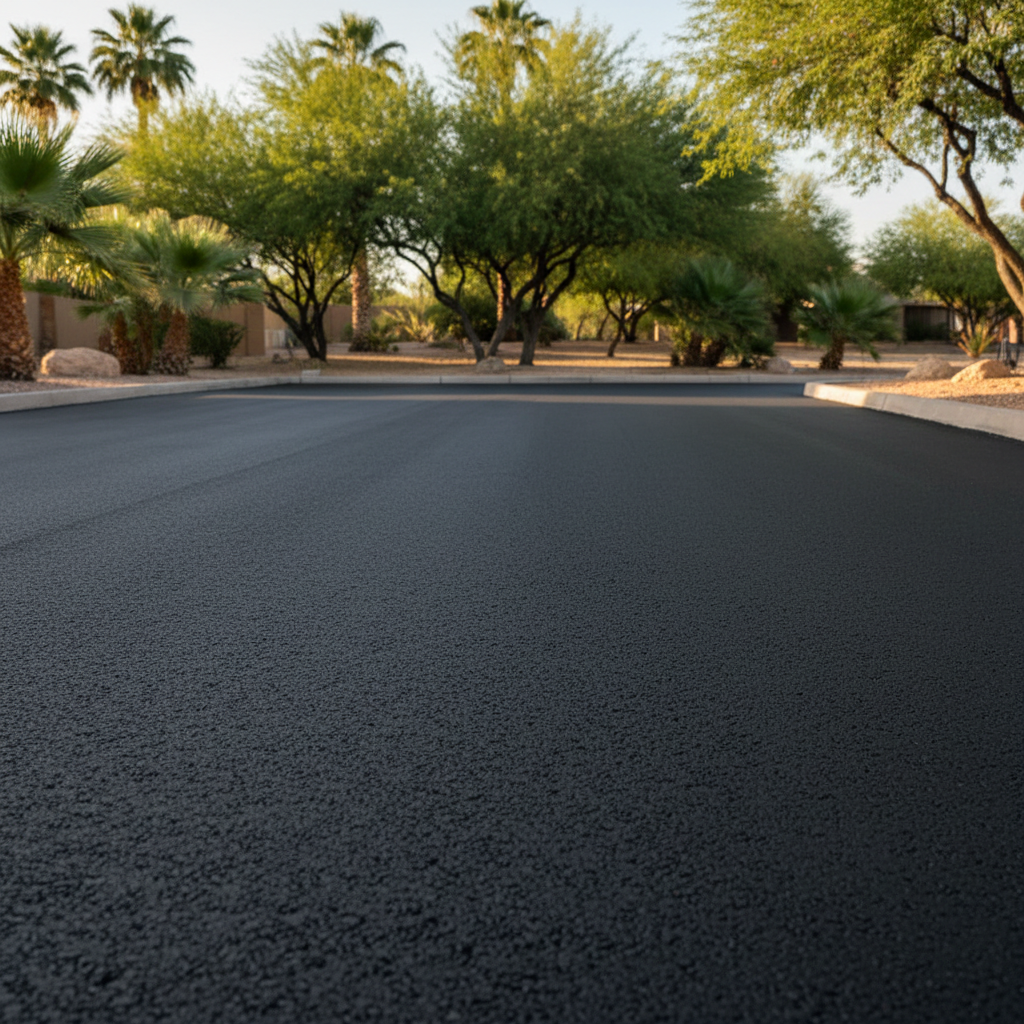
Alright, let's talk commercial asphalt. I know what you're thinking: 'I'm a homeowner, why do I care about commercial asphalt?' Well, you'd be surprised how often folks in Mesa, especially those with larger properties, shared driveways, or even just curious about the differences, ask me about it. It's not just for big box stores or apartment complexes, you know. Sometimes, the principles and even the materials cross over. So, I figured I'd tackle some of the most common questions I get from homeowners about commercial-grade asphalt. No fancy sales pitch, just the straight goods from someone who's been laying asphalt here in Mesa for years.
What exactly makes asphalt 'commercial' versus 'residential'?
That's a great question, and it's not just about the size of the job. The biggest difference usually comes down to the mix design and the base preparation. Commercial asphalt is built to handle much heavier loads and higher traffic volumes. Think about a parking lot at a busy shopping center in East Mesa compared to your driveway. That shopping center sees thousands of cars, delivery trucks, and even heavy equipment. Your driveway? Just your car and maybe a visitor's. So, for commercial projects, we're typically looking at a thicker asphalt layer, often with more aggregate (that's the crushed rock) and a stronger binder to stand up to constant abuse. The base underneath is also usually much more substantial, often compacted in multiple layers to prevent settling and cracking under all that weight. It's all about durability and how long it lasts under stress.
Can I use 'commercial-grade' asphalt for my residential driveway? Is it overkill?
Technically, yes, you can use it. Is it overkill? For most residential driveways, absolutely. It's like buying a semi-truck just to pick up groceries. You'd be paying for a level of strength and durability that your average car or pickup truck simply doesn't demand. The cost per square foot for commercial-grade material and the thicker base prep that goes with it is significantly higher. For a standard residential driveway, a well-installed residential asphalt mix with a proper base is more than enough, and it will last you a very long time, especially if you keep up with maintenance. We're talking about a cost difference that rarely makes sense for a homeowner, unless you're parking heavy construction equipment or have a constant stream of commercial vehicles on your property. Even then, we'd spec it out specifically rather than just calling it 'commercial grade'.
How long does commercial asphalt typically last compared to residential?
If installed correctly and maintained, commercial asphalt can last anywhere from 15 to 25 years, sometimes even longer. Residential asphalt, with good maintenance, usually hits the 10 to 20-year mark. The key phrase there is 'if installed correctly and maintained.' Commercial surfaces get more wear and tear, but they're also built to withstand it. They often have more rigorous maintenance schedules because businesses can't afford to have their parking lots fall apart. Things like regular sealcoating, crack filling, and prompt repairs are crucial for both, but even more so for commercial applications. Here in Mesa, with our intense summer sun and monsoon rains, that maintenance is even more critical for both types of asphalt. That UV exposure and thermal cycling can really do a number on the binder if it's not protected.
What kind of maintenance does commercial asphalt need?
Commercial asphalt needs consistent attention. Think of it like this: a business relies on its parking lot or access roads to be safe and functional for customers and employees. So, maintenance isn't just about how it looks; it's about liability and operations. We're talking about regular sweeping to remove debris, especially after a dust storm, which can prevent premature wear. Sealcoating every 2-3 years is non-negotiable to protect against UV rays, oil spills, and water penetration. Crack filling needs to happen as soon as cracks appear to stop water from getting into the base and causing bigger problems. Pothole repair should be immediate. Sometimes, depending on the traffic and wear patterns, an overlay might be needed after 10-15 years to rejuvenate the surface without a full tear-out. It’s an ongoing process, not a one-and-done deal, you know?
Are there specific challenges for commercial asphalt in Mesa's climate?
Absolutely. Our climate here in Mesa is tough on asphalt, commercial or residential. The extreme heat in the summer speeds up the oxidation of the asphalt binder, making it brittle and prone to cracking. That's why sealcoating is so important – it's like sunscreen for your pavement. Then you've got the monsoon season, which brings sudden, heavy downpours. If water gets into cracks or poorly drained areas, it can erode the base layer, leading to potholes and pavement failure. Good drainage design is crucial for commercial jobs here. We also deal with expansive clay soils in some parts of Mesa, which can shift with moisture changes, putting stress on the pavement above. Mesa Diamond Asphalt always takes these local conditions into account when we're designing and installing any asphalt surface, especially for commercial properties that need to last.
If I have a large property, like a horse ranch or a multi-unit rental, should I consider commercial asphalt?
This is where it gets interesting for some homeowners. If you've got a very long driveway that sees frequent heavy deliveries, or if you own a property with multiple rental units where there's constant vehicle traffic, then yes, it's worth discussing. For a horse ranch, for example, you might have feed trucks, trailers, and other heavy equipment coming and going. A standard residential driveway might not hold up. In these cases, we wouldn't necessarily use the exact same specs as a Walmart parking lot, but we'd definitely lean towards a more robust base and a stronger asphalt mix than a typical residential job. It's about matching the pavement to the expected load and traffic. We'd assess your specific needs, the type of vehicles, and the frequency, then recommend a tailored solution that gives you the durability you need without going overboard on cost.
What's the biggest mistake people make when thinking about commercial asphalt?
The biggest mistake I see, whether it's a business owner or a homeowner with a large property, is underestimating the importance of the base. People focus on the asphalt layer itself, which is understandable — it's what you see. But the foundation, that compacted aggregate base underneath, is absolutely critical for commercial asphalt to perform. If the base isn't properly prepared, compacted to the right density, and thick enough for the expected loads, that expensive commercial asphalt on top won't last. It'll crack, sink, and fail prematurely, no matter how good the asphalt mix is. It's like building a house on a shaky foundation. You wouldn't do it for your home, and you shouldn't do it for your pavement. Always ask about the base preparation – it's a non-negotiable for a long-lasting, durable commercial asphalt surface.