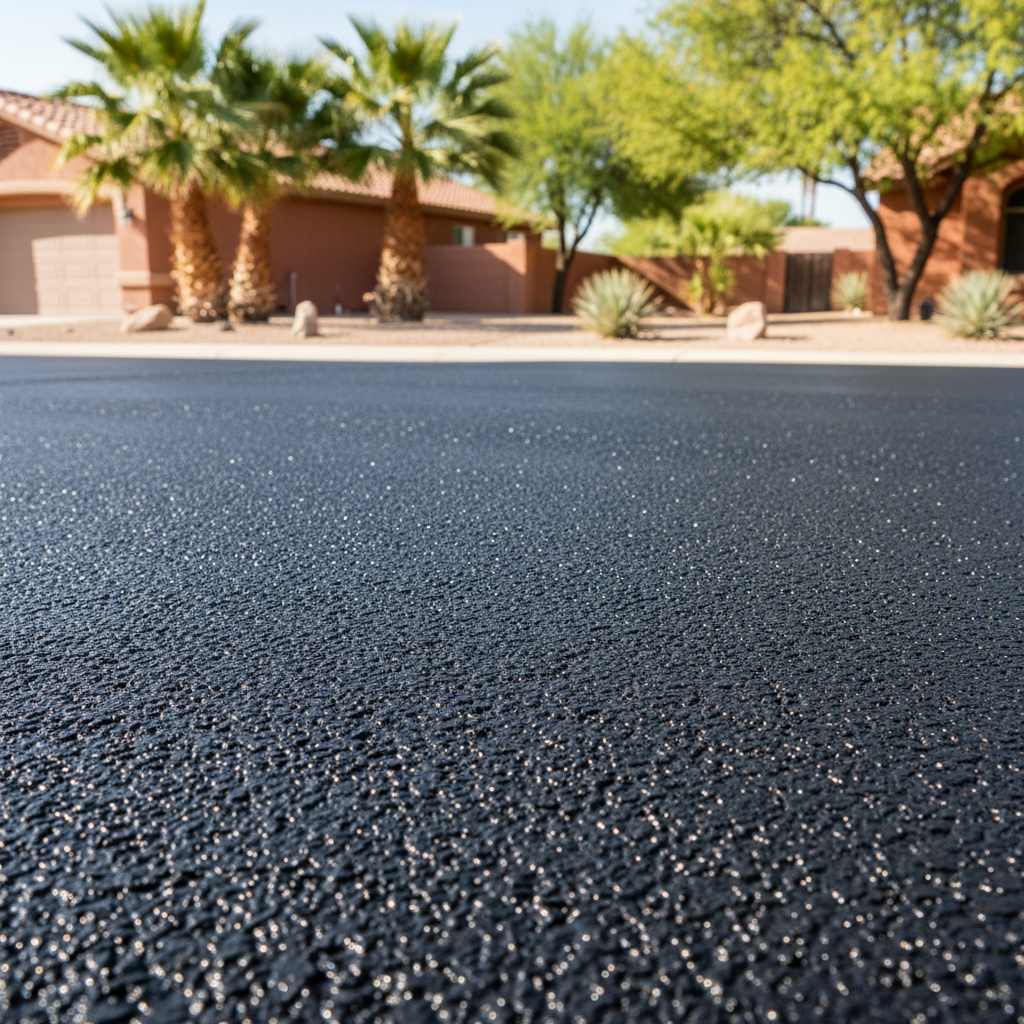
Alright, let's talk about slurry coating your driveway. You've seen those driveways that just look tired, faded, and like they're giving up the ghost, right? Then you see one that's dark, rich, and looks almost brand new. Chances are, that's a slurry coat doing its job. It's a common question I get from folks around Mesa, especially when the summer sun really starts beating down: "Can I just slap some of that stuff on myself?"
What Even IS Slurry Coating?
First off, let's clear up what we're talking about. Slurry coating, sometimes called sealcoating, is a protective layer you put over your existing asphalt. It's not just paint, you know? It's actually a mix of asphalt emulsion, water, aggregate (usually sand), and some other stuff. When it dries, it forms a tough, black layer that protects your driveway from UV rays, water, and chemicals. Think of it like sunscreen for your asphalt, but way more durable. It fills in small cracks, brings back that deep black color, and extends the life of your pavement. You'll hear people use 'sealcoat' and 'slurry coat' interchangeably, but a true slurry coat often has more sand in it, which makes it a bit thicker and better at filling minor imperfections.
Before You Even Think About Starting
Look, I'm all for homeowners tackling projects, but you need to be realistic about this one. It's not just about buying a bucket of black goo and slapping it on. Here's what you need to consider:
- Your Driveway's Condition: Is it mostly sound with just some fading and hairline cracks? Great, a slurry coat can help. But if it's crumbling, got potholes, or alligator cracking everywhere? Stop right there. A slurry coat won't fix structural problems. You'd just be putting lipstick on a pig, and it'll peel off. You need repairs first, maybe even an overlay, before you think about coating.
- Weather is King: This is Mesa, so we get plenty of sun, but you can't just do this any old time. You need consistent temperatures above 50°F, ideally for 24-48 hours, and no rain in the forecast for at least a day or two after. Humidity also plays a role. If it's too hot and dry, it can cure too fast and crack. Too humid, and it takes forever to dry. Spring and fall are usually your best bets here.
- Cleaning is Crucial: This is probably the most overlooked step. Your driveway has to be SPOTLESS. I'm talking power washing, scrubbing oil stains, pulling weeds from cracks, and blowing off every speck of dust and debris. If you don't clean it right, the slurry won't stick, and you'll have it flaking off in no time.
The DIY Approach: What You're Getting Into
If your driveway is in good shape and you're determined to do it yourself, here's the rundown. You'll need to buy the right type of sealer – look for a good quality asphalt emulsion product, often available at home improvement stores. Don't cheap out here. You'll also need:
- A stiff-bristle broom or squeegee specifically for applying sealer.
- Brushes for edging.
- Gloves, old clothes, and maybe some knee pads.
- A power washer and degreaser for cleaning.
- Crack filler for any cracks wider than a quarter-inch.
The process itself involves thoroughly cleaning, filling cracks (let them cure!), then carefully applying the slurry in thin, even coats. You usually need two coats, letting the first one dry completely before the second. It's labor-intensive, especially if you have a larger driveway, like those long ones you see in some of the older, more spread-out neighborhoods around Apache Junction or out towards Queen Creek. It takes patience and a steady hand to get an even finish without streaks or puddles.
When to Call Mesa Diamond Asphalt (or another Pro)
Honestly, for most homeowners, especially with larger or more damaged driveways, calling a pro is the smarter move. Here's why:
- Experience & Equipment: We've got industrial-grade equipment, including commercial sprayers that give a much more even and consistent finish than you'll get with a squeegee. We also know how to prep the surface properly, which is half the battle.
- Right Materials: We use commercial-grade slurry mixes that are often more durable and longer-lasting than what you can buy off the shelf. These are formulated to stand up to our intense Arizona sun.
- Crack Repair: If you have anything more than minor hairline cracks, a pro can properly clean, fill, and even hot-pour crack seal larger issues before applying the slurry. This ensures a much better and longer-lasting result.
- Time & Effort: This isn't a quick Saturday morning job. It's a full day or two of hard work, not including cure time. Your time is valuable, right?
- Warranty: A reputable contractor, like us at Mesa Diamond Asphalt, will stand behind our work. If something goes wrong, we'll fix it.
If your driveway is looking rough, or if you just want that deep, rich black finish that protects your investment for years, give us a call. We'll come out, take a look, and give you an honest assessment of whether a slurry coat is right for you. If it is, we'll get it done right, saving you the headache and backache.
After the Slurry Coat is Down
Whether you DIY or hire a pro, the aftercare is similar. Stay off the driveway for at least 24-48 hours, maybe longer if it's humid or cooler. Don't park heavy vehicles on it for a few days. Avoid turning your steering wheel while stationary on the fresh coat – that's how you get tire marks. Give it time to fully cure and harden. You'll want to re-coat every 2-3 years, depending on traffic and how harsh the sun is on your specific spot. Regular cleaning and quick attention to any new cracks will keep that slurry coat doing its job for a long time.