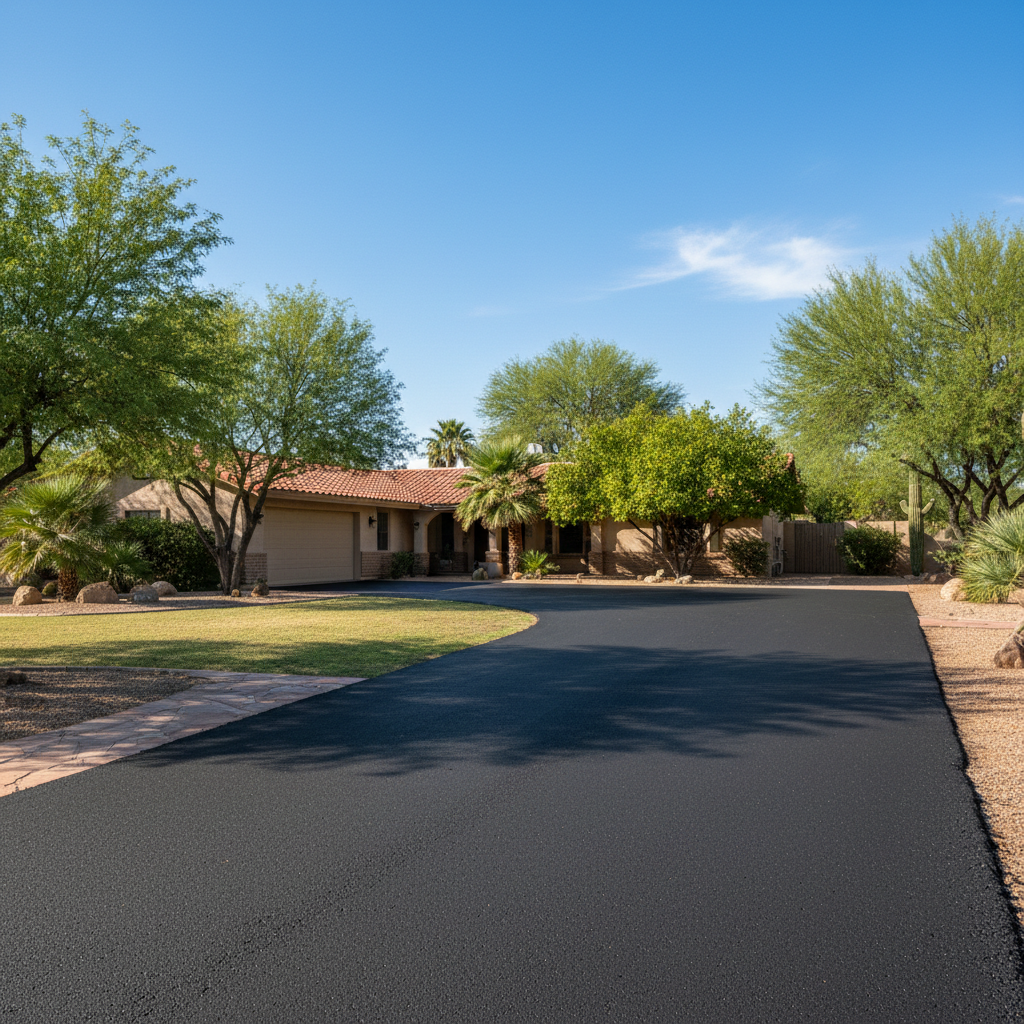
Alright, let's talk about your driveway. You shelled out good money for that asphalt, and you want it to last, right? Especially here in Mesa, where the sun beats down relentlessly and those monsoon storms can really do a number on things. I've seen it all over the years, from brand new installs to driveways that are practically falling apart. The good news is, a little bit of care goes a long way. It's not rocket science, but it does take some consistent effort.
Extending Your Driveway's Life in the Arizona Heat
The biggest enemy of asphalt in Arizona isn't necessarily traffic; it's the sun. That UV radiation and extreme heat break down the binders in the asphalt, making it brittle and prone to cracking. Then the monsoons come, and water gets into those cracks, expanding and contracting with temperature changes, and before you know it, you've got potholes. Here's what you can do:
- Sealcoating is your best friend: Think of sealcoat like sunscreen for your driveway. It puts a protective layer over the asphalt, shielding it from UV rays, oxidation, and even minor spills. For new driveways, I usually recommend waiting about 6-12 months for the asphalt to fully cure, then getting it sealed. After that, every 2-3 years is a good general rule, but for heavily trafficked areas or driveways in direct, all-day sun, you might consider every 18-24 months. It's a small investment that pays off big time.
- Watch your drainage: Make sure water isn't pooling on your driveway. If you've got low spots where water sits after a rain, that's a problem waiting to happen. Standing water softens the asphalt and can lead to premature failure. Sometimes it's a simple fix like clearing a clogged drain or redirecting a downspout.
- Limit heavy loads: While asphalt is tough, it's not indestructible. Try to avoid parking really heavy vehicles (like RVs or commercial trucks) in the exact same spot for extended periods. The concentrated weight, especially in our summer heat when asphalt is softer, can cause depressions and rutting.
Regular Maintenance: What You Should Be Doing
Beyond sealcoating, there are a few simple things you can do yourself to keep an eye on things:
- Keep it clean: Sweep off dirt, leaves, and debris regularly. This prevents organic matter from breaking down on the surface and helps you spot any issues early.
- Deal with spills immediately: Oil, gas, and other automotive fluids are no good for asphalt. They dissolve the petroleum binders, weakening the pavement. If you spill something, clean it up right away with an absorbent material and a mild detergent. Don't let it sit.
- Trim back roots: If you have trees or large shrubs near your driveway, their roots can grow underneath and cause cracks or upheaval. Keep an eye on them and trim them back if they're getting too close. The soil here in Mesa can be pretty expansive, and roots just make it worse.
Warning Signs You Shouldn't Ignore
You don't need to be an expert to spot problems. Just walk your driveway once a month or so and look for these:
- Cracks: Any cracks, whether they're hairline or wider, are a red flag. Small cracks let water in, which leads to bigger problems.
- Potholes: These are obvious. They start small and get bigger fast. Don't ignore them.
- Fading or dull appearance: If your asphalt looks gray instead of black, it means the surface is oxidizing and losing its protective oils. This is a clear sign it's time for sealcoating.
- Raveling: This is when the aggregate (the small stones) starts coming loose from the surface. It looks like your driveway is shedding pebbles. This indicates the binder is failing.
- Standing water: As I mentioned, puddles after a rain mean drainage issues or depressions forming.
When to Call a Professional (Like Mesa Diamond Asphalt)
Look, I'm all for DIY, but some things are best left to the pros. You should definitely call us if you see:
- Widespread cracking or alligator cracking: This looks like a series of interconnected cracks, resembling alligator skin. It means the base layer is likely failing, and you're beyond a simple patch.
- Significant potholes: A small pothole can sometimes be patched, but large, deep ones often indicate a bigger structural problem.
- Major drainage issues: If water is consistently pooling or flowing incorrectly, it might require regrading or more extensive repair than you can handle.
- Heaving or sinking sections: This usually points to issues with the sub-base or soil movement, which needs professional assessment and repair.
- You're unsure: If you see something and you're not sure if it's a big deal or not, just give us a call. It's better to get an expert opinion early than to let a small problem turn into an expensive one. We're happy to come out and take a look.
Taking care of your driveway isn't glamorous, but it's essential for protecting your investment. A well-maintained driveway not only looks better but also adds to your home's curb appeal and value. Keep an eye on it, do the simple stuff, and don't hesitate to call Mesa Diamond Asphalt when you need a hand with the bigger jobs.