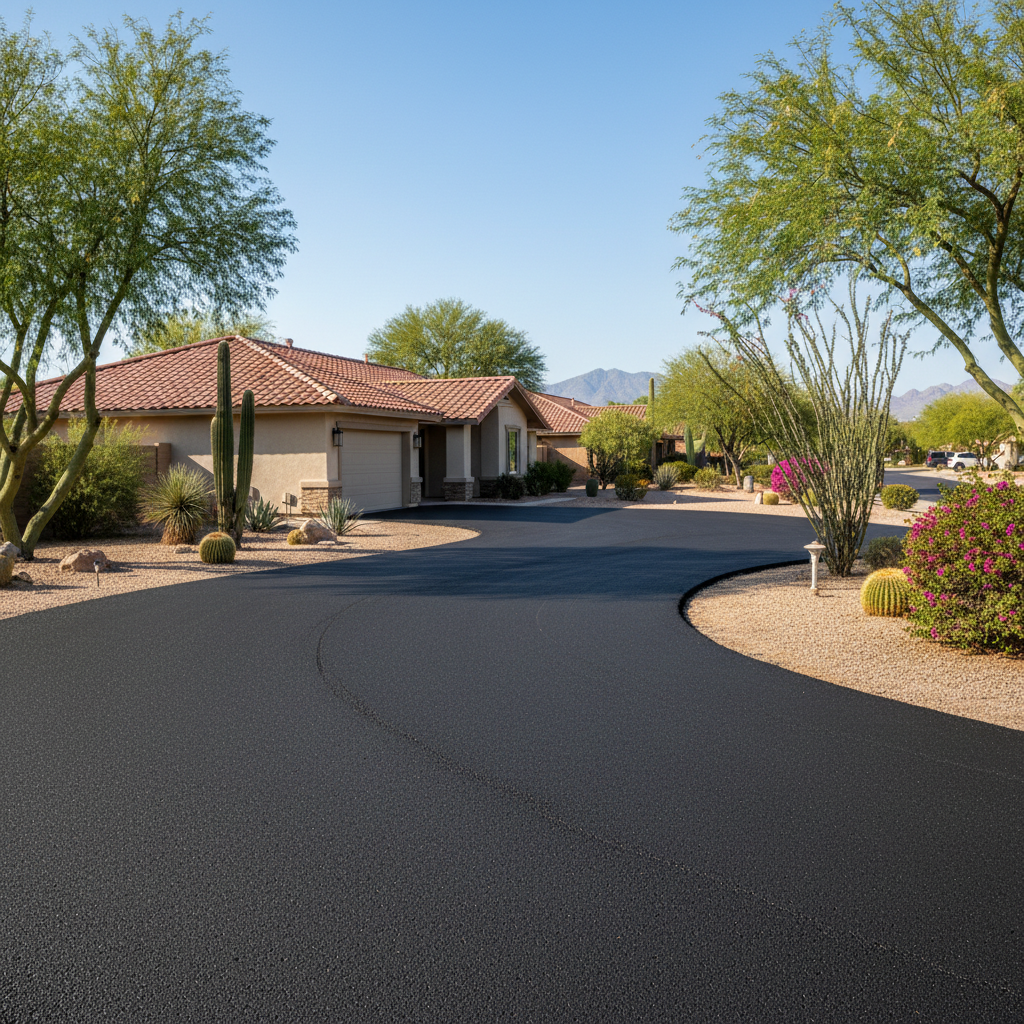
Alright, let's talk about your asphalt here in Mesa. You've got a driveway, a parking lot, maybe a private road – whatever it is, you want it to last. And you know what? It absolutely can, even with our brutal summers and occasional monsoon downpours. But it ain't gonna last if you just ignore it. Think of it like your truck; you wouldn't just drive it for years without an oil change, right? Same deal with your asphalt.
Extending the Life of Your Pavement
The biggest thing you can do to make your asphalt last is protect it from the elements, especially the sun. We get some serious UV rays out here, and that sun bakes the oils right out of the asphalt, making it brittle and prone to cracking. That's where sealcoating comes in. It's like sunscreen for your pavement, and it's probably the most important thing you can do to extend its life. You're looking at needing this every two to three years, depending on traffic and how much direct sun it gets. Don't skip it; it's way cheaper than repaving, believe me.
Another big one is drainage. Water is the enemy of asphalt. If water sits on your pavement, it's going to find its way into cracks, and then when it expands and contracts with temperature changes – even small ones here – it'll make those cracks worse. Make sure your gutters are working, and if you see puddles forming after a rain, that's a red flag. Sometimes it's a simple fix, other times it means you've got a deeper issue with the sub-base.
Regular Maintenance: What You Should Be Doing
Beyond sealcoating, there are a few things you should be doing regularly. First off, keep it clean. Dirt, debris, leaves – they all hold moisture against the surface, and that's bad news. A good sweep or even a hose-down once in a while goes a long way. Oil and gas spills? Clean those up immediately. They break down the asphalt binder, leaving soft spots that'll turn into potholes quicker than you can say 'Mesa Diamond Asphalt'.
Next, crack sealing. You're going to get cracks. It's just a fact of life with asphalt, especially with our expansive clay soils here in parts of Mesa that can shift a bit. The key is to address them when they're small. A small crack is easy to fill and seal; a big crack that's been left open for water to get into? That's a whole different, more expensive problem. Walk your property once a month or so, especially after a heavy rain or a particularly hot spell, and look for new cracks. If you see one, get it sealed up.
- Keep an eye on the edges of your pavement. If they're crumbling, it means they're not supported. Sometimes a little landscaping adjustment can fix this.
- Don't let heavy vehicles sit in the same spot for too long, especially in the summer. Our asphalt gets softer when it's hot, and heavy loads can cause depressions.
- Trim back tree roots. They're strong, and they'll push right through your asphalt if they're growing underneath it.
Warning Signs You Can't Ignore
You know something's wrong when you start seeing certain things. These aren't just cosmetic; they're signs that your pavement is failing and needs attention. Here's what to look out for:
- Alligator Cracking: This looks like a series of interconnected cracks, just like an alligator's skin. This is a serious sign of structural failure, usually because the base layer underneath isn't holding up. You'll see this a lot in high-traffic areas or where heavy loads are common.
- Potholes: Obvious, right? But a pothole isn't just a hole; it's a symptom of deeper damage. Water gets in, freezes (not often here, but it can happen in winter), thaws, and expands, or just erodes the base. Once you have one, it'll grow fast.
- Raveling: This is when the aggregate (the small stones) starts to separate from the asphalt binder, making the surface rough and loose. It means the asphalt is drying out and losing its binding properties.
- Depressions or Rutting: If you see areas where the pavement is sinking or showing tire tracks, it usually means the sub-base isn't stable or it's been subjected to too much weight.
When to Call a Professional
Look, you can handle sweeping and maybe even some small crack filling yourself if you're handy. But for anything more serious, you need to call in the pros. If you're seeing alligator cracking, potholes bigger than a dinner plate, widespread raveling, or significant depressions, that's beyond a DIY fix. You're looking at needing patching, possibly milling and overlay, or even a full-depth replacement for severe issues.
Don't wait until it's a huge problem. Small repairs are always less expensive than big ones. If you're unsure, just give us a call at Mesa Diamond Asphalt. We'll come out, take a look, and give you an honest assessment of what needs to be done. We've been doing this a long time, and we know what works here in the Valley. Getting ahead of these issues will save you a lot of headaches and money down the road.