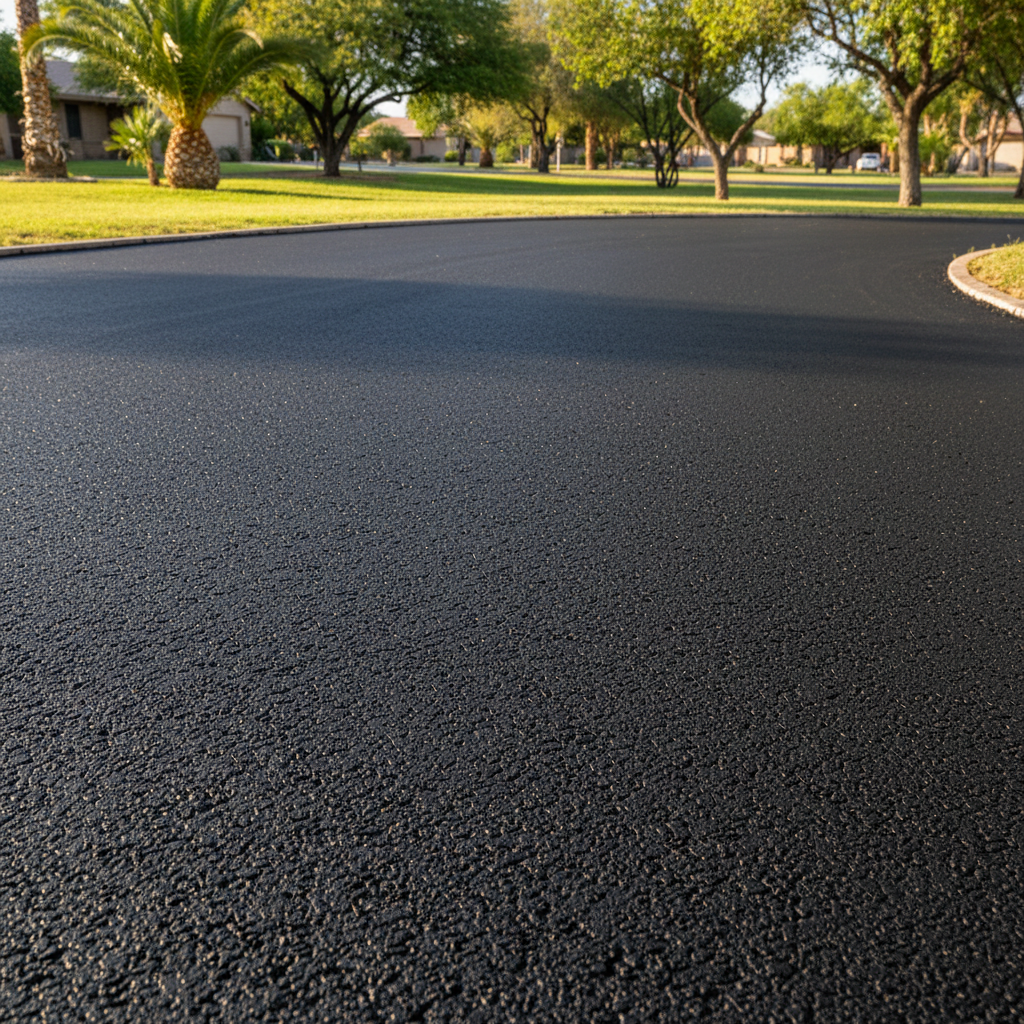
Running a business or managing a commercial property around Mesa means property managers have enough on their plate without having to guess how a parking lot is holding up. Out here in the East Valley, intense summer heat and caliche-heavy soils put a unique beating on pavement. Mesa Diamond Asphalt has heard just about every question property managers and business owners can throw at us over the years. Mesa Diamond Asphalt wants to break down the most common questions with honest and practical answers.
How often should commercial asphalt actually be sealcoated in our climate?
Property managers will hear all sorts of conflicting timelines, but for a typical commercial lot in Mesa, property owners are looking at getting a fresh sealcoat every two to three years. The blazing Arizona sun bakes essential oils right out of the binder, leaving the surface brittle and gray. If property owners wait five or six years, the asphalt starts to ravel and break apart. Sealcoating acts like sunscreen, locking in flexibility and keeping UV rays from destroying asphalt pavement.
Why do cracks show up so fast even on relatively new lots?
Cracks usually come down to thermal expansion and extreme temperature swings in Mesa, AZ. A parking lot surface can easily hit 140 degrees in July, then cool down significantly overnight. That constant movement causes the material to flex, and minor hairline cracks form naturally. When those cracks pop up, property managers must not ignore them. Left unsealed, monsoon rains seep straight into the sub-base, turning a simple thirty-minute crack fill into a major patching project.
Can I keep my business open while my parking lot gets paved?
Yes, but asphalt paving takes careful staging. Mesa Diamond Asphalt almost always breaks larger commercial projects into phases so customers and delivery trucks still have access to the building. The work requires good communication and clear signage. If an asphalt contractor tells property managers they have to shut down an entire retail center for a week straight without a phased plan, find someone else who knows how to keep local businesses running during construction.
What causes those annoying dips near the dumpster pads or entrance gates?
Heavy, concentrated weight is the culprit here. Garbage trucks and delivery semi-trucks put immense pressure on asphalt, especially when trucks are turning tightly or sitting still in one spot. Regular asphalt mixes will warp under that kind of stationary load, particularly when summer heat softens the pavement up. For areas like dumpster pads and heavy truck aprons, Mesa Diamond Asphalt often recommends swapping out asphalt for thick reinforced concrete so the surface stops sinking.
How long do I have to wait before driving on newly patched or paved areas?
As a rule of thumb, keep vehicle traffic off fresh asphalt for at least 24 to 48 hours. Fresh hot-mix asphalt needs time to cool down and fully compact under its own weight. Driving heavy vehicles on fresh asphalt too early will leave permanent tire ruts and gouges that ruin the finish. Foot traffic is usually fine after a few hours, but cars and trucks need to stay off until the material reaches ambient ground temperature.
What is the real lifespan of a commercial parking lot in Mesa?
If commercial asphalt was graded and paved right to begin with, and property owners stick to a strict schedule of crack sealing and sealcoating, property managers can easily get 15 to 20 years or more out of a commercial asphalt lot in Mesa, AZ. Skip routine maintenance, though, and property owners will be looking at a costly full replacement in less than a decade. Taking care of small issues early is always cheaper than rebuilding from the dirt up.