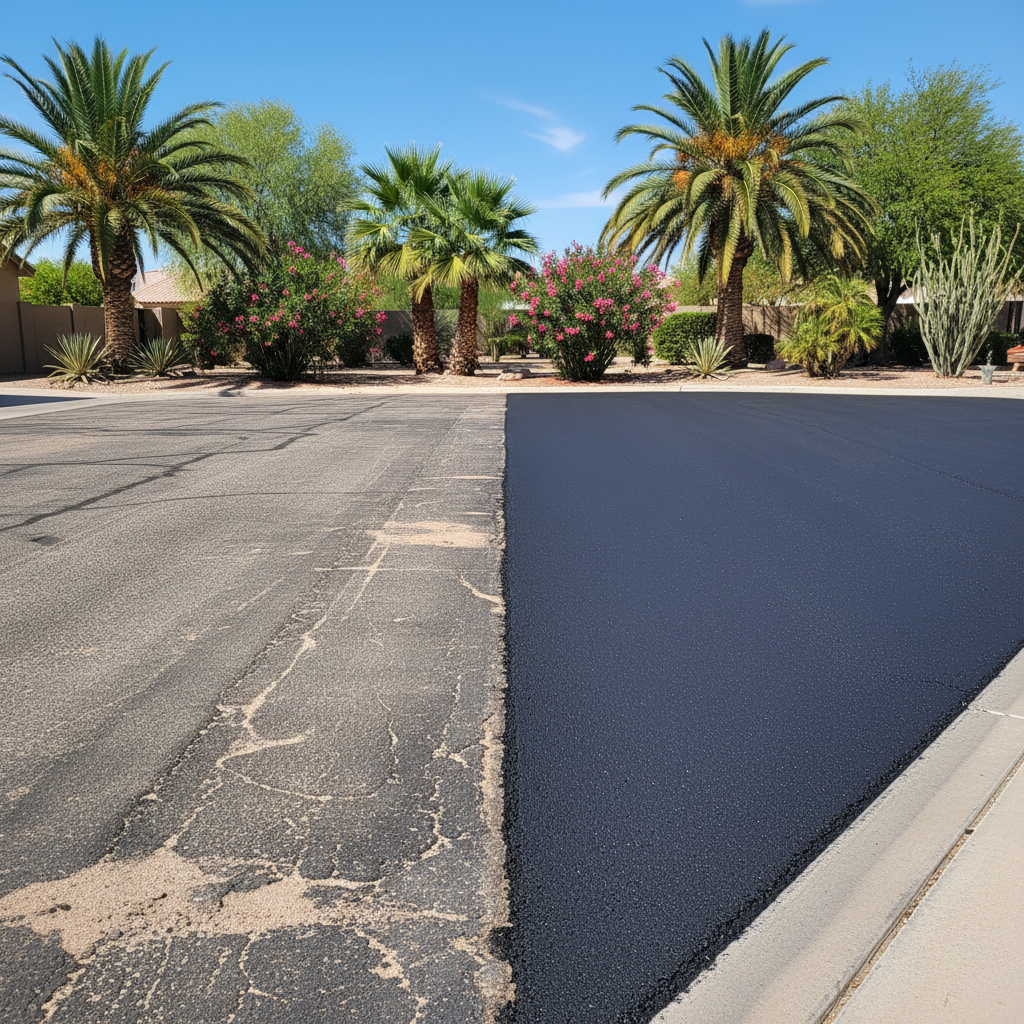
Alright, let's talk about your driveway here in Mesa. You've got cracks, maybe some potholes, and it's just not looking its best. So, what do you do? When it comes to asphalt, you've really got two main choices: a full replacement or an overlay. I see homeowners wrestle with this all the time, trying to figure out which one makes the most sense for their wallet and their property.
What's an Asphalt Overlay?
Think of an overlay like putting a fresh coat of paint on a wall that's still structurally sound. We're essentially laying a new layer of asphalt – usually 1.5 to 2 inches thick – right over your existing, but damaged, asphalt surface. Before we do that, though, we've got to do some prep work. We'll clean the surface thoroughly, fill any major cracks or potholes, and sometimes apply a tack coat to help the new layer bond properly. It's a way to refresh the look and extend the life of your driveway without tearing everything out, you know?
What's a Full Asphalt Replacement?
This is exactly what it sounds like. We're ripping out the old, failing asphalt, hauling it away, and then starting from scratch. That means we're evaluating the sub-base – the dirt and gravel underneath – making sure it's properly graded and compacted. If the sub-base is shot, we'll fix that too. Then, we lay down new layers of asphalt, typically 3 to 4 inches thick for a residential driveway. It's a complete do-over, from the ground up.
Cost: Where the Rubber Meets the Road
This is usually the first question folks ask, and for good reason. An overlay is almost always going to be less expensive upfront than a full replacement. You're saving on demolition costs, hauling away debris, and often on the amount of new material needed. We're talking potentially 30-50% less than a full replacement. A full replacement, on the other hand, is a bigger investment because it involves more labor, more material, and more equipment time.
Durability & Longevity: What Lasts Longer?
Here's where the comparison gets real important, especially with our Mesa sun beating down. An overlay can give you another 8-15 years of good service, assuming your existing sub-base is still in decent shape. It's a good solution for surfaces that have surface cracks, fading, and minor deterioration. But if the underlying issues are structural – like major alligator cracking that goes deep, or sections that are sinking because of a bad sub-base – an overlay is just a band-aid. It'll look good for a bit, but those underlying problems will eventually telegraph through the new layer.
A full replacement, when done right by a company like Mesa Diamond Asphalt, can easily last 20-30 years, sometimes even more. Because we're addressing any sub-base issues and laying down a completely new, thicker surface, you're getting a much more robust and long-lasting solution. It's built to withstand the intense heat cycles we get here, from scorching summers to surprisingly cool winters, and the expansive clay soils common around areas like Dobson Ranch.
Maintenance: Keep It Looking Good
Both options benefit from good maintenance, but a full replacement starts you off with a clean slate. With an overlay, you'll still want to sealcoat every 2-3 years to protect that new surface, just like you would with a brand-new driveway. Crack filling is also important for both, but a new replacement should have fewer cracks for a longer period. The better the foundation, the less work you'll have down the line.
Appearance: First Impressions Matter
Both options will significantly improve the appearance of your driveway. An overlay will give you that fresh, dark black look, smooth out minor imperfections, and boost your home's curb appeal. A full replacement does the same, but it also ensures a perfectly even surface without any ghosting of old cracks showing through. If you're looking for that absolutely flawless, brand-new look with no hint of past issues, replacement wins.
My Recommendation for Mesa Homeowners
Look, if your driveway has widespread, deep alligator cracking, significant potholes, or areas that are clearly sinking or heaving, an overlay isn't going to cut it. You're throwing good money after bad. Those are signs of a failing sub-base, and the only real fix is a full replacement. It's a bigger investment, but it's the right one for long-term durability.
However, if your driveway is generally sound but showing its age – lots of hairline cracks, surface oxidation, some minor isolated potholes – an overlay can be a fantastic, cost-effective solution. It'll give you a beautiful, smooth surface for many years to come, and save you some cash upfront.
The best way to know for sure? Get an experienced local contractor like Mesa Diamond Asphalt to come out and take a look. We'll tell you straight what your driveway needs and give you an honest quote for both options. Don't guess; get it inspected.